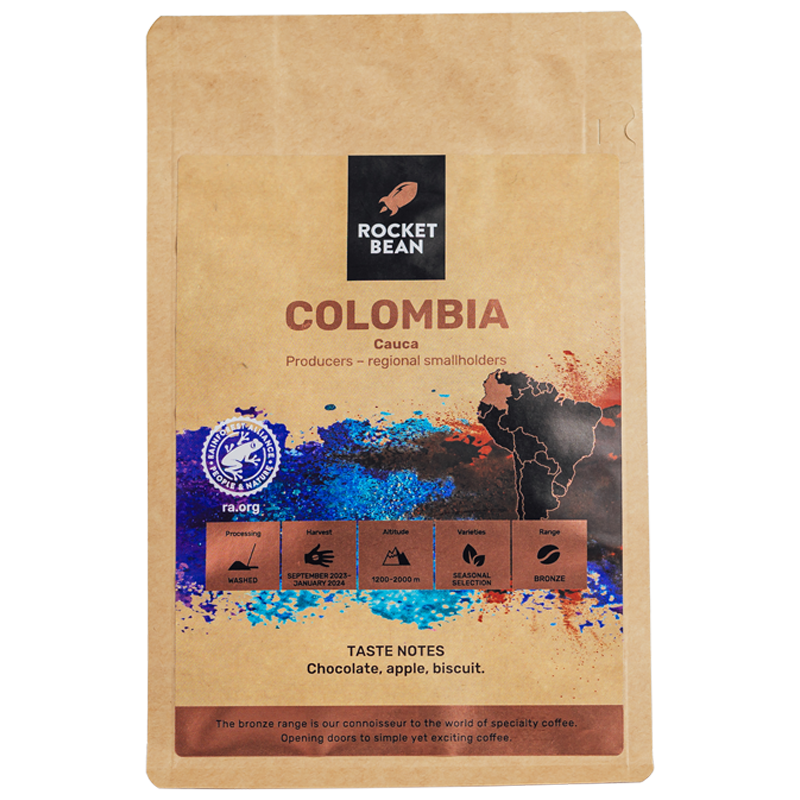
Colombia | Cauca, Washed Sugarcane Decaf
Decaf Filter
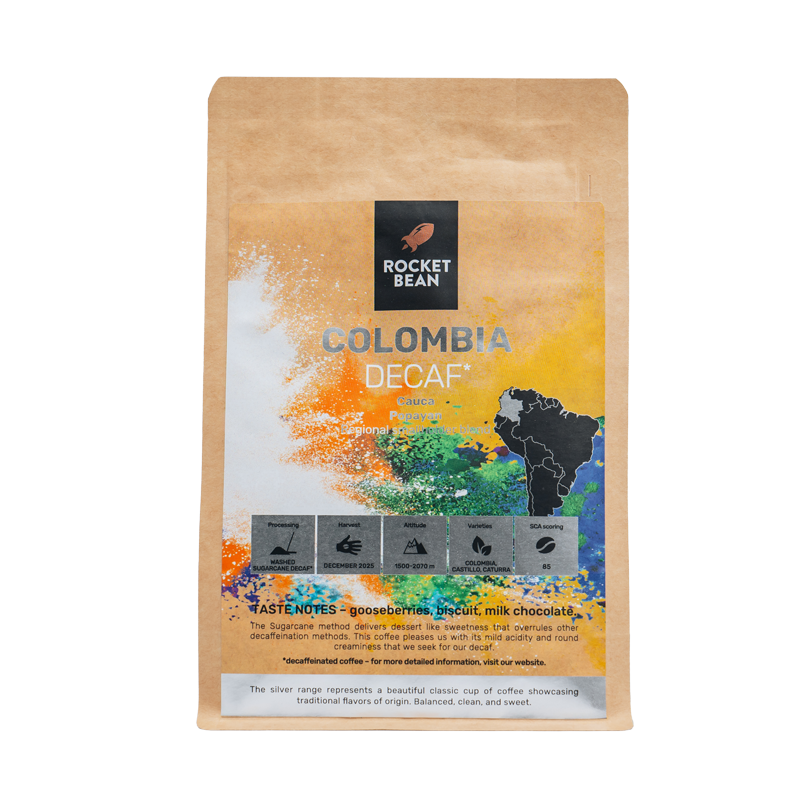
- Country: Colombia
- Region: Cauca, Popayan
- Producers: Regional smallholder blend
- Taste and Arome: Gooseberries, biscuit, milk chocolate.
15,00 €
Processing
Washed Sugarcane Decaf
Harvest
December 2025
Altitude
1500-2070 m
Variety
Colombia, Castillo, Caturra
Scoring
85
The Sugarcane method delivers dessert-like sweetness that overrules other decaffeination methods. This coffee pleases us with its mild acidity and round creaminess that we seek for our decaf. *
Varieties
Caturra
This variety was discovered on a plantation in the Minas Gerais state (Brazil) at the beginning of the 20th century. Caturra is a mutation of the Bourbon variety, known as the first naturally occurring coffee variety mutation ever discovered.
It became popular because of its small-sized crops, high yield, and ability to mature coffee cherries faster than other varieties after planting. The specifics of this variety meant that farmers could grow more coffee using less land. Caturra got its name because of its crop size. In the Guarani language, caturra – means small.
In the cup, Caturra reflects a delicate taste profile with bright acidity and a low-to-medium body.
Castillo
Improving and mutating Caturras hybrid variety Variedad Colombia, Colombian agronomists found a variety resistant to leaf rust, CBD (Coffee Berry Disease), and other diseases, still giving a high yield crop. And so, in 2005, FNC introduced farmers of Colombia with Castillo. A project called – Colombia sin Roya (Colombia without Rust) by FNC. This project aimed to recover and renew the production of high-quality coffee in Colombia.
Nowadays, Castillo is the most commonly grown coffee plant in Colombia, mostly because of its plant benefits, taste profiles, and subsidized seed pricing for farmers.
Sugarcane decaffeination process
The Colombian sugarcane decaffeination method is our favourite for many reasons, blissful taste notes and extra sweetness being just two of them. The main ingredient of this method – ethyl acetate (E.A.) is an organic compound naturally found in fruit juices, cereals, and sugarcane.
This process begins with the fermentation of molasses derived from sugarcane to create ethanol. Ethanol is an alcohol that is afterwards mixed with acetic acid (the main component of vinegar) to generate the E.A., which is then used in the decaffeination process.
Before the decaffeination process itself, regional smallholders bring their freshly picked coffee cherries to the washing station. After the mechanized de-pulping process, coffee beans are washed in fresh, clean water. Then they go through the decaffeination process, which goes by these steps:
- Green coffee beans are steamed for about 30 minutes before the decaffeination to unlock their pores, allowing caffeine extraction.
- Afterwards, coffee is placed in a solution of water and Ethyl Acetate (E.A.), a naturally occurring compound and solvent derived through the fermentation of sugarcane.
- Green coffee is submerged in the solvent, which naturally bonds to the salts of chlorogenic acids within the coffee, allowing the extraction of caffeine.
- Once the coffee is saturated, the tank is drained, and a fresh solution is added. This process continues for approximately 8 hours.
- After the last remaining caffeine is gone, the coffee is removed from the solution and prepped for another steaming.
- The final, low pressure steaming removes the remaining traces of E.A. Decaffeinated coffee is then dried, physically polished to ensure cleanliness, packed and ready for export.
Similar products