
Peru & Colombia | Cinnamon Filter Blend
filter
- Country: Peru & Colombia
- Region: Cajamarca & Quindio
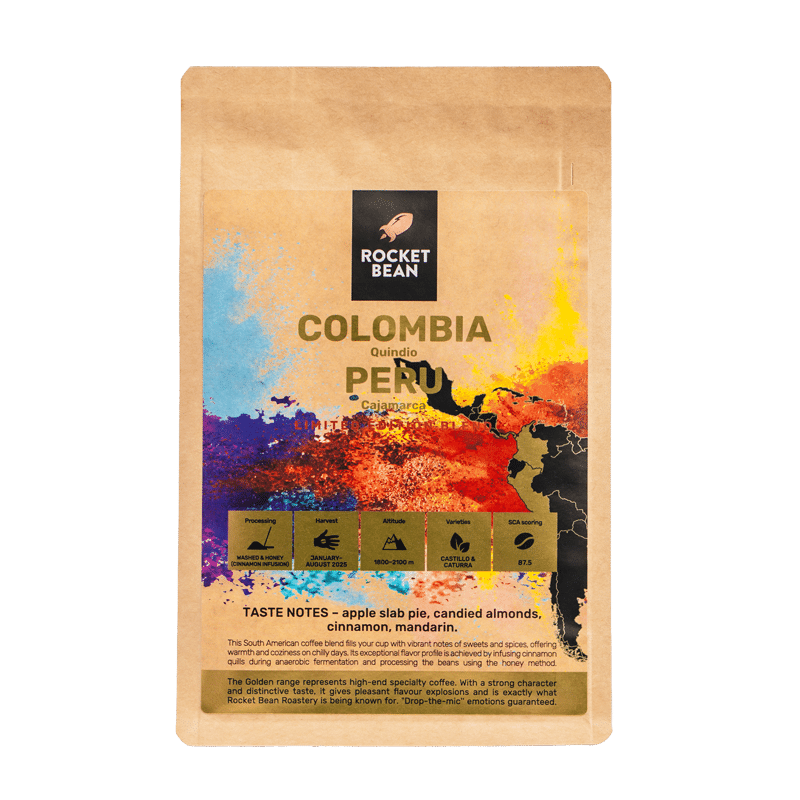
- Taste and Arome: Apple slab pie, candied almonds, cinnamon, mandarin
17,00 €
Processing
Washed & Honey (Cinnamon infusion)
Harvest
January–August 2025
Altitude
1800–2100 m
Variety
Castillo & Caturra
Scoring
87,5
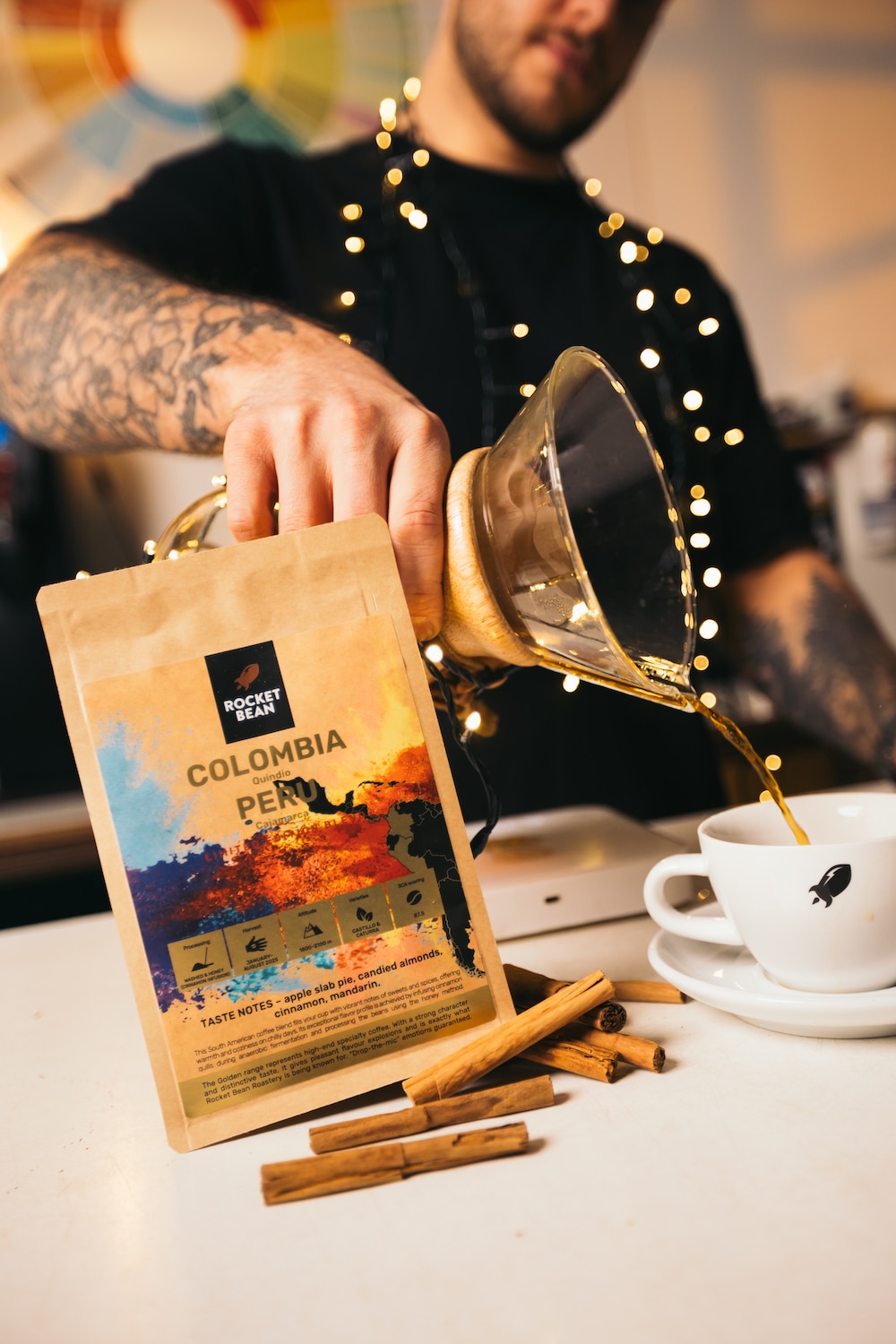
This South American coffee blend fills your cup with vibrant notes of sweets and spices, offering warmth and coziness on chilly days. Its exceptional flavor profile is achieved by infusing cinnamon quills during anaerobic fermentation and processing the beans using the honey method.
Peru
Peru is known for producing some of the finest coffee in the world, with a reputation built due to the unique geographic and climatic advantages of this origin. One of the key elements in this origin coffee’s outstanding cup profile is the Peruvian Andes Mountains. The high altitudes, ranging up to 2200 meters, slow the maturation of coffee cherries, which helps enrich coffee’s overall taste profile. Additionally, the volcanic soil in these regions infuses the coffee with distinctive tastes, while the cool temperatures and shade-grown methods help to minimize pests and bolster sustainable farming practices. These unique conditions create Peruvian coffee that is distinctive with intricate flavour profiles, bright acidity, and floral undertones. Coffee cultivation in Peru dates back to the mid-18th century when Spanish colonists first introduced coffee plants. Over time, coffee farming has become a cornerstone of the local economy, particularly in the high-altitude areas of this origin.
Colombia
Colombia sits right along the equator, giving it steady sunlight and two main harvests each year—something very few coffee regions enjoy. Its three Andean mountain ranges create countless microclimates, where altitude, temperature, and rainfall vary from valley to valley. This diversity helps produce a wide range of flavour profiles, from bright and fruity to sweet and chocolatey. High altitudes—often between 1,800 and 2,000 meters—slow the ripening of coffee cherries, allowing sugars and flavours to develop more fully. Volcanic soils add natural minerals that enrich the plants, while cool nights and warm days create ideal growing rhythms. Many farms are surrounded by native forests, which provide shade and protect biodiversity.
Processing
Washed
Ripe cherries are selectively harvested and stored in containers before processing. Then the pulp is removed with mechanical depulpers that separate beans from the cherries. After this process, all pulps are deposited in fermentation tanks to make organic fertilizer. When the lot is depulped, coffee beans are then placed in water tanks and fermented from 12 to 24 hours, depending on the altitudes of the production plots. After fermentation beans are removed from the tanks and washed so that remaining mucilage is removed. Then coffee is dried in so-called solar dryers, avoiding the contamination of the beans by external factors that can affect coffee. This step takes around 6 days for beans to dry and reach 11-12% moisture so that they can be transferred for storage. Beans are hulled and packed in 69 kg bags a few days before they are transported to port.
Honey
For this Colombian lot, only the ripest cherries are hand-picked and meticulously sorted to ensure exceptional sweetness. The selected cherries are then anaerobically fermented with cinnamon quills for 72 hours in sealed tanks. Following fermentation, the coffee is dried with the mucilage intact on raised African beds. Cinnamon quills are placed on the drying beds to further enhance the infusion of cinnamon flavour into the beans. Temperature is carefully managed, staying below 35°C, using shade to ensure optimal drying conditions. Once the cherries reach the ideal humidity level, the beans are hulled and vacuum-sealed to preserve their quality.


