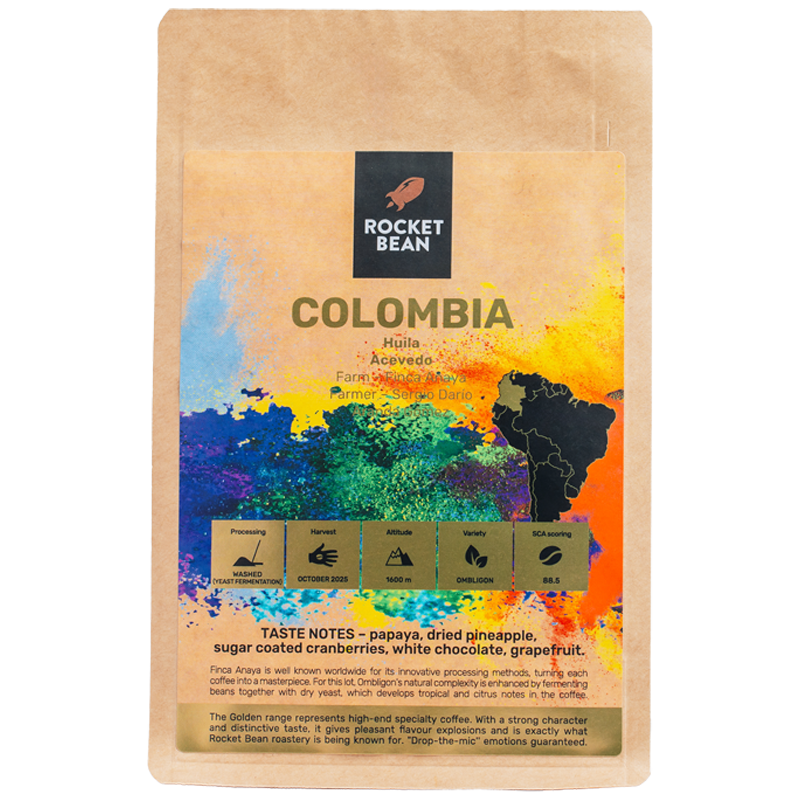
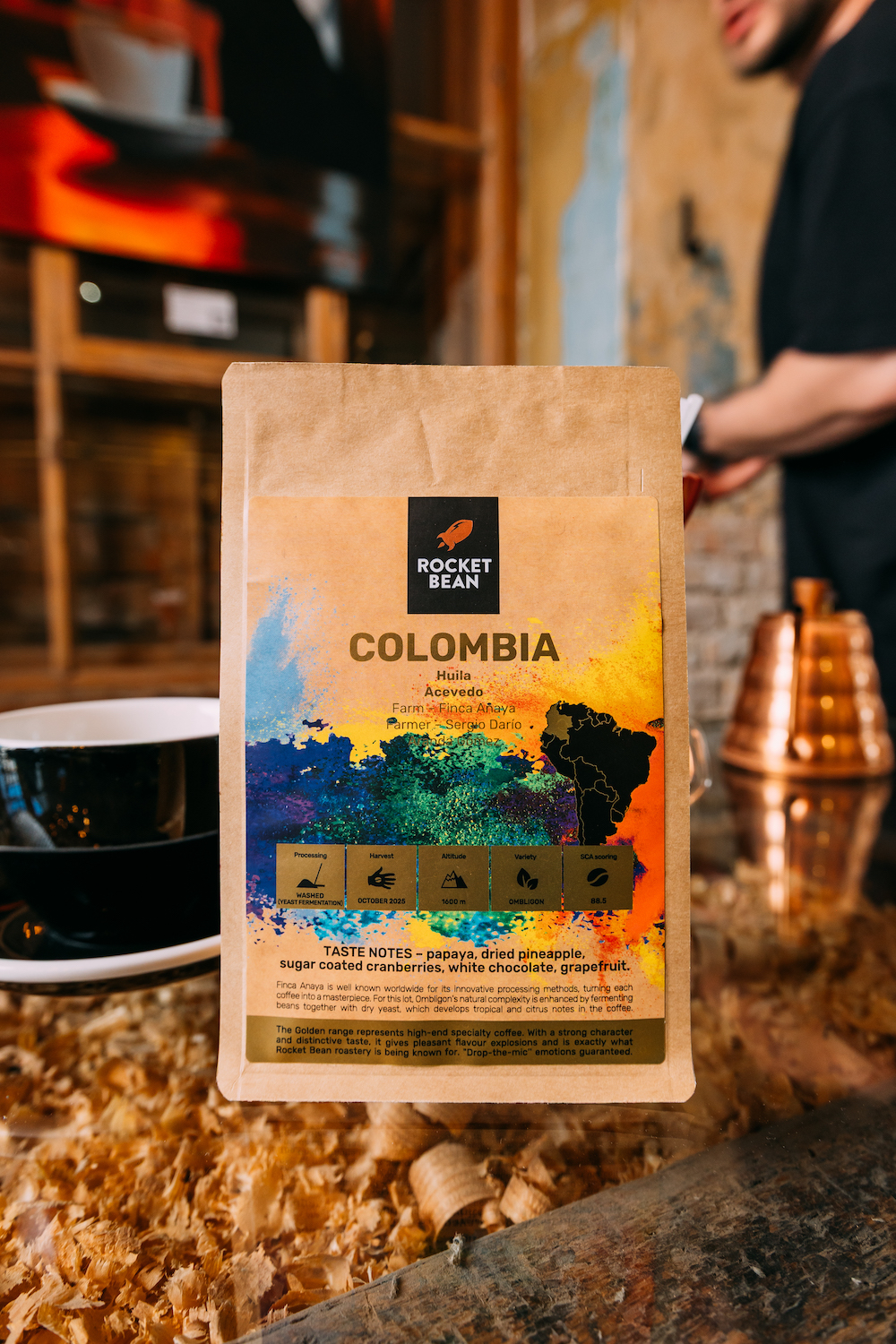
Colombia | Huila, Finca Anaya, Washed (Yeast fermentation)
Filter
- Country: Colombia
- Region: Huila, Acevedo
- Producers: Sergio Darío Aranda Gómez
- Taste and Arome: Papaya, dried pineapple, sugar coated cranberries, white chocolate, grapefruit.
22,50 €
Processing
Washed (Yeast fermentation)
Harvest
October 2025
Altitude
1600 m
Variety
Ombligon
Scoring
88.5
Finca Anaya is well known worldwide for its innovative processing methods, turning each coffee into a masterpiece.
For this lot, Ombligon’s natural complexity is enhanced by fermenting beans together with dry yeast, which develops tropical and citrus notes in the coffee.
Region – Huila
Nestled between the Eastern and Central mountain ranges, the Huila region is blessed with ideal conditions for growing coffee. Daily temperatures range from 13 to 22 degrees Celsius, and the coffee trees thrive between 1,200 and 1,800 metres above sea level. The soil is rich in volcanic minerals thanks to the Nevado del Huila volcano, which supplies essential nutrients to the plants. The high altitude and cool nights help the cherries ripen slowly, developing deeper sweetness and more defined acidity. Farmers in the region often grow varieties such as Caturra, Castillo, and Bourbon, and most rely on careful hand-picking to select only the ripest cherries.
Coffees from Huila often show bright acidity, gentle fruit notes, and a rounded, balanced cup profile. And with experimental processes growing in popularity, this region is highly prized as a source of award winning lots, new varieties, and innovative processing methods that result in mind-blowing cup profiles.
Finca Anaya
Finca Anaya sits in the heart of Acevedo, Huila, where the Aranda Gómez family has cared for the land for more than 30 years. Surrounded by two mountain ranges and a rich natural landscape, the farm benefits from conditions that shape each harvest. Guadua bamboo and fruit trees grow alongside the coffee, supporting the environment and forming part of the daily routine for those who work there. Every bean reflects the family’s long-standing dedication and their connection to the land.
Sergio Darío Aranda Gómez grew up in a coffee-producing region and has spent over 15 years working with specialty coffee. Over time, he has refined his approach, focusing on fermentation, carefully assessing each lot, and improving farming practices to get the best he and his team can from each harvest. His coffee lots are well known across the world for surprising taste profiles and innovative processing methods, which stand out with their unique characteristics and polished cup quality.
Ombligon Variety
Ombligon is a natural mutation that occurred in Colombia. It is challenging to determine from which varieties it mutated, but its specifics are similar to well known varieties such as Caturra, Castillo, and Bourbon. This variety is classified as rare, as the farmer states it is exclusively grown in the Huila region. The name “Ombligon,” in Colombian-Spanish, means “belly button,” given due to the unique round form of cherries that this variety exhibits.
Processing
The process begins with careful manual handpicking of fully ripe cherries at Finca Anaya. The cherries are then floated and disinfected with hot water to maximally reduce the microbial load naturally present from the farm environment. This disinfection step helps remove microorganisms that could affect fermentation stability in further steps of processing. The cherries then undergo an initial fermentation for 24 hours in plastic tanks before being depulped to fully separate mucilage from beans.
A second fermentation then takes place for 48 hours, allowing further development of coffee lot’s sweet taste profile. After this stage, a specifically selected yeasts that help develop tropical notes, along with a pre-fermented fruit mixture, are introduced to the beans, and they undergo submerged fermentation. Water at 38°C is added to boost microorganism activity and help develop coffee’s final taste, while key parameters such as pH, EC, TDS, and Brix are closely monitored to make coffee uniform and prevent overfermentation. Once fermentation is complete, the coffee is thoroughly washed with water at 20°C to stop further development and then dried to a moisture content of 10–11.5%. Finally, the dried coffee is rested in bags, allowing it to stabilize before being hulled and exported to Rocket Bean.