Peru | Cajamarca, Hermanos Guerreros, Natural
filter
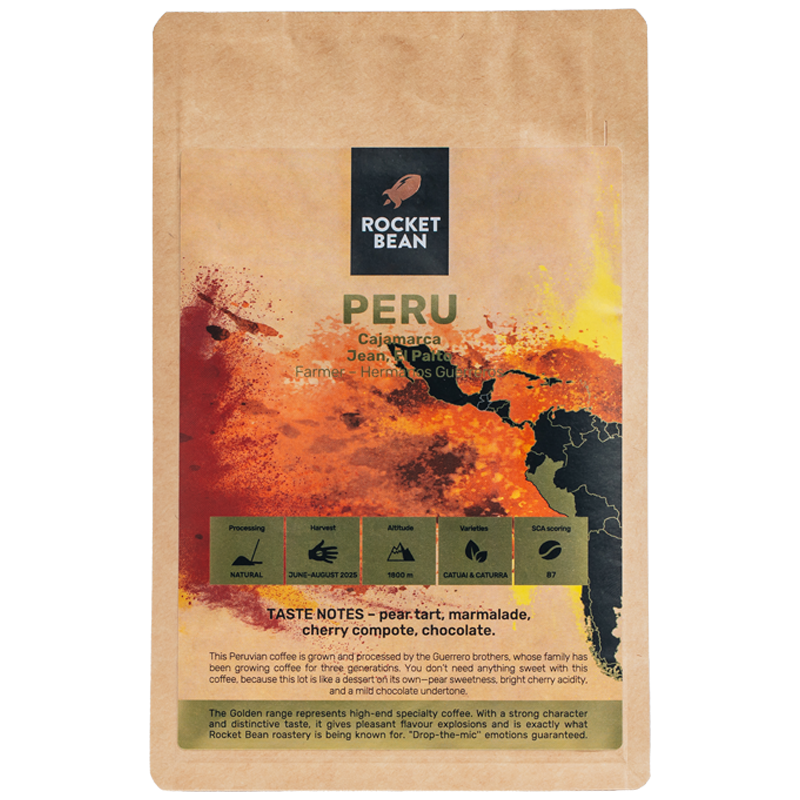
- Country: Peru
- Region: Cajamarca, Jaén, El Palto
- Producers: Guerrero brothers
- Taste and Arome: Pear tart, marmalade, cherry compote, chocolate
18,00 €
Processing
Natural
Harvest
Jun–Aug 2025
Altitude
1800 m
Variety
Catuai & Caturra
Scoring
87
This Peruvian coffee is grown and processed by the Guerrero brothers, whose family has been growing coffee for three generations. You don’t need anything sweet with this coffee, because this lot is like a dessert on its own—with pear sweetness, bright cherry acidity, and a mild chocolate undertone.
Origin
Peru & Jean
Peru is known for producing some of the finest coffee in the world, with a reputation built due to the unique geographic and climatic advantages of the origin. One of the key elements in this origin coffee’s outstanding cup profile is the Peruvian Andes Mountains. The high altitudes, ranging up to 2200 meters, slow the maturation of coffee cherries, which helps enrich coffee’s overall taste profile. Additionally, the volcanic soil in these regions enriches the coffee with distinctive tastes, while the cool temperatures and shade-grown methods help to minimise pests and bolster sustainable farming practices. These unique conditions create distinctive Peruvian coffee with intricate flavour profiles, bright acidity, and floral undertones. Coffee cultivation in Peru dates back to the mid-18th century when Spanish colonists first introduced coffee plants. Over time, coffee farming has become a cornerstone of the local economy, particularly in the high-altitude regions of this origin.
Jaén is located in northern Peru and is a part of the larger Cajamarca coffee region. The landscape is warm, green, and mountainous, with farms usually sitting between 1200 and 1200 meters above sea level. These elevations give the coffee enough time to develop sweetness and bright, clean flavors. Most of the coffee in Jaén is grown by small family farms, often using traditional and eco-friendly methods. The climate is slightly warmer compared to the higher subregion of San Ignacio. This often results in coffees with smooth body, mild acidity, and notes of chocolate, nuts, and soft fruits. Jaén is also a major coffee hub in Cajamarca. Many farmers from surrounding districts bring their harvests to Jaén for processing or sale, making it an important economic center for the region.
Farmers
Behind Hermanos Guerreros is a family-run business where each member manages a small coffee farm and processes their coffee lots in their own small family processing station. They have been growing coffee for 3 generations in a row, passing knowledge from one generation to next one. They mainly produce washed lots, but in recent years, they have upgraded their station to also handle natural and honey processing methods. One of their key features is their commitment to slow drying: their natural lots typically take 30–35 days to dry, which is significantly longer than other farmers. They are usually among the last to deliver their lots to the local hub, where the coffees are sold. This careful attention to detail often results in coffees with notes of caramel, red fruit, mild citrus, and soft chocolate
Proceesing
The Guerreros are highly meticulous coffee producers, known for their careful, hands-on approach at every stage of production. They practice selective harvesting, picking only the ripest cherries to ensure the highest quality. Cherries are then placed on so-called African raised drying beds with multiple layers. During the drying process, they closely monitor both humidity and temperature, moving the cherries every 60–90 minutes to ensure even drying and prevent mold or overfermentation. This slow and attentive process can take up to 30–35 days, significantly longer than the typical drying period for other farmers. The beans are removed from dried cherries and carefully sorted. Then the coffee lot is again moved to beds for drying to reach the appropriate moisture level for coffee beans before they are moved to the local hub for sale. From there, beans are hulled and packed in 69 kg bags and transported to the local port.